
Is Baby in the Right Position? Prenatal Chiropractic Care Can Help
If you’re pregnant and thinking about giving birth (which, let’s be honest, probably pops into your mind at least once a day), you’ve probably heard the phrase “optimal fetal positioning.” Maybe your provider mentioned it at an appointment, a friend who recently gave birth brought it up, or you’ve already found yourself Googling things like “how to get baby’s head down” or “Spinning Babies.”
Wherever you are in your pregnancy journey, one thing is sure: how your baby is positioned before birth can make a big difference in how your labor unfolds.
The encouraging news? Prenatal chiropractic care can gently support your body in creating the best possible environment for your baby to move into an ideal position—naturally.
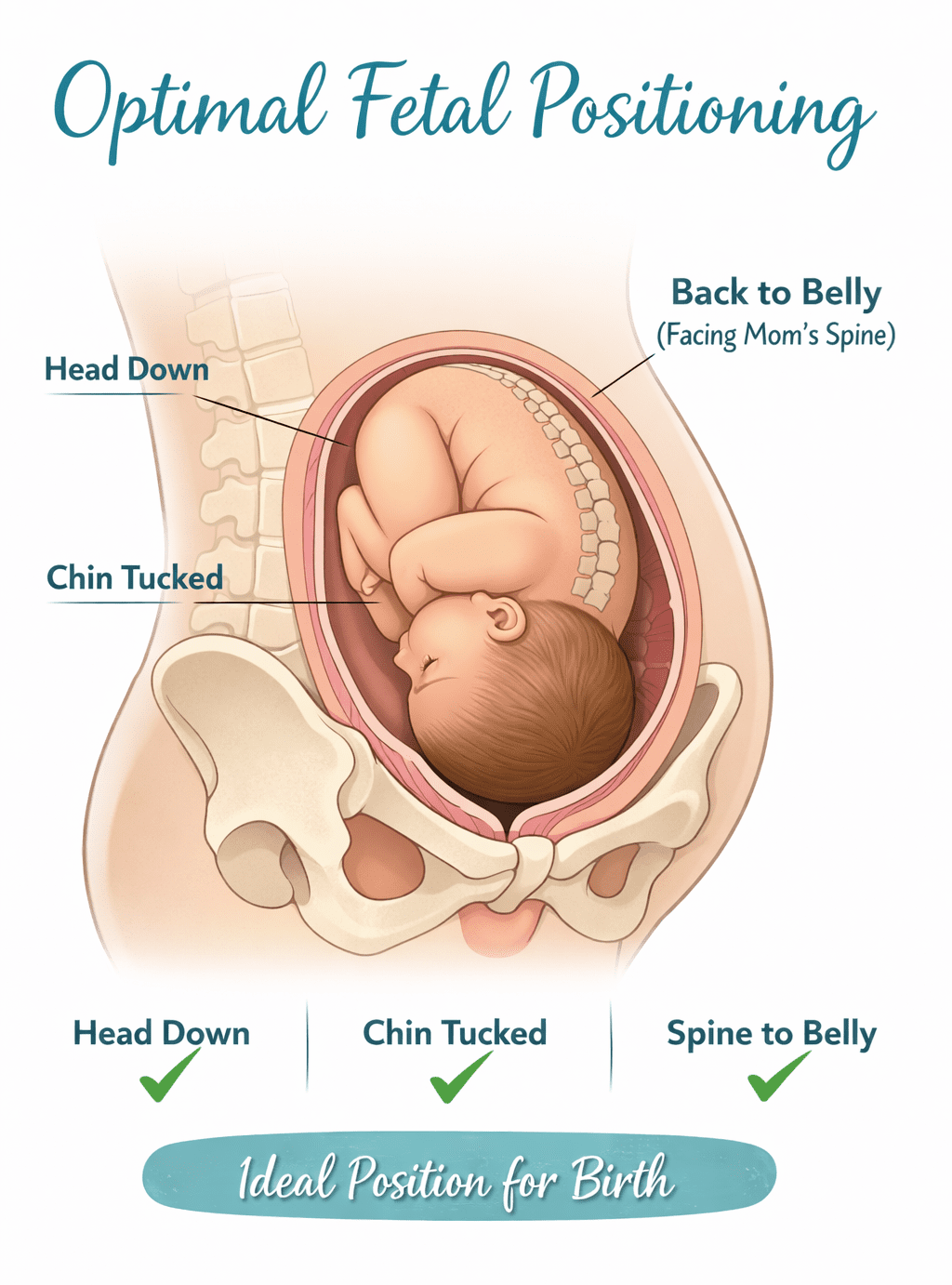
What Is Optimal Fetal Positioning?
In simple terms, optimal fetal positioning means your baby is:
- Head down
- Chin tucked
- Facing your back, with their spine toward your belly
This “optimal” position allows baby to move through the birth canal more easily and efficiently, which can support a smoother, more comfortable labor. But sometimes your baby settles into a less-than-ideal position, such as breech (bottom-down), transverse (sideways), or even sunny-side-up (face-up). These positions can lead to more prolonged labor, more back pain and discomfort, fetal distress, and an increased likelihood of medical interventions like a C-section.

How to Tell What Position Your Baby Is In
You may be able to identify your baby’s fetal position based on their kicks or hiccups (kicks should be up high; hiccups down low), or just by generally feeling around for different body parts. Here are some clues that can help give you a general idea:
- Where you feel kicks: Kicks higher in your belly often mean the baby’s head is down, while strong kicks low may suggest baby is breech.
- What feels firm: A firm, heavy feeling low in your pelvis may be baby’s head (it could also be the baby’s bottom, but the head will be rounder and harder). You might feel the baby’s bottom up by your rib cage.
- Overall belly feel: Some moms notice a smoother, more rounded belly when baby’s back is facing forward, and a bumpier feel when baby is facing outward or sideways.
Your midwife or OB can get a better idea of positioning through gentle hands-on assessment, listening to baby’s heart tones, and ultrasound.
A Gentle Reminder Before We Move On…
Babies tend to move a lot during pregnancy, especially earlier on. Position can change multiple times, and that’s completely normal. The goal isn’t perfection—it’s about creating space and balance in your body, so baby has the opportunity to settle into an ideal position when the time is right.
Baby Positioning Isn’t Just About Luck
It’s easy to think baby positioning is all up to chance—or that your baby is just being stubborn. And while every pregnancy is different and babies absolutely have their own personalities, your body (especially your pelvis and nervous system) plays a huge role in where and how your baby settles.
Your pelvis, surrounding muscles and ligaments, posture, and nervous system all influence how much space baby has to move and get comfortable. If there’s an imbalance or tension in the pelvis, it can limit that space, making it harder for the baby to rotate or drop into an optimal position.
That’s where prenatal chiropractic care comes in.

How Prenatal Chiropractic Supports Better Baby Positioning
Prenatal chiropractic care focuses on supporting a balanced pelvis and a well-functioning nervous system. When your body is aligned and working the way it’s designed to, your uterus can better support your growing baby—and baby has more room to move freely and settle into a head-down position.
Many pregnancy chiropractors are trained in the Webster Technique, a gentle chiropractic method designed to optimize the positioning of your pelvis/sacrum and prepare you for labor and delivery. This technique allows your sacrum to realign into an optimized, natural position, helping your baby move into the proper birthing position (naturally!).
It’s not about “flipping” your baby. It’s about creating the best possible conditions in your body so baby can choose the best spot on her own.
Specifically, the Webster Technique focuses on:
- Balancing the pelvis
- Reducing tension in muscles and ligaments
- Supporting the round ligament, which helps stabilize the uterus
- Creating space for your baby to move into the optimal birthing position naturally.
As an added bonus, the Webster Technique is also highly effective for relieving sciatic pain during pregnancy by easing tension around the pelvis and nerves.

When Should I Start?
The short answer? Anytime!
Many moms choose to start chiropractic care early in pregnancy to support overall comfort, posture, and nervous system health as their body changes. Others begin later—especially if they’ve been told their baby is breech or not yet head down.
Care around 30–34 weeks can be particularly helpful for encouraging optimal infant positioning, but it’s never too early or too late to support your body. Every pregnancy is different, and care is always tailored to where you are and what you need.

What to Expect at a Prenatal Chiropractic Visit
Your first visit is centered around you. We’ll talk about how you’re feeling, how your pregnancy is progressing, your birth goals, and any concerns you have along the way.
We also use INSiGHT scans to take a closer look at how your nervous system is functioning and identify areas of tension or imbalance. From there, we create a personalized care plan designed to support your body throughout pregnancy.
Adjustments during pregnancy are extremely gentle and focused on comfort. Many moms notice they leave appointments feeling more relaxed, less tight, and more connected to their bodies—and their babies.
Supporting a Smoother Birth—Naturally
When your body is balanced and your nervous system is supported, your baby is more likely to settle into an ideal position for birth. That can mean:
- Labor that is shorter, smoother, and more straightforward
- Less back pain and discomfort
- Fewer interventions
- A calmer, more connected birth experience
Chiropractic care is about working with your body—not forcing change, but supporting what your body already knows how to do.
If you’re preparing for birth and want to give your baby the best possible start, we’d love to be part of your support team. Reach out to schedule a prenatal chiropractic appointment and take one more confident step toward the birth experience you’re hoping for. You’ve got this—and we’ve got you.
Join the Well Community!
Stay in the loop with tips, updates, and family wellness insights—straight to your inbox! Sign up for our email newsletter today and never miss a beat.